A Poke-Class Action

I enjoy seeing stories at the intersection of my hobbies. As a lawyer and avid Pokemon Go trainer (player), this class action lawsuit against Niantic–the developer of the popular mobile game–piqued my in250px-025Pikachuterest.

This past Saturday, Niantic sponsored Pokemon Go Fest in Chicago. And it was a disaster. Trainers waited in three-hour lines to get into the Grant Park–the venue in which Pokemon Go Fest took place. Once trainers got into Grant Park, many were unable to access Pokemon Go because of connectivity issues. Niantic tried to reduce trainers’ angst by refunding all tickets to the event, providing attendees with $100 of in-game credits, and a Lugia.

Seriously. A Lugia.
Continue reading

IRAP v. Trump: splitting the baby

President landscape-1481277768-donaldTrump’s “travel bans” have been the linchpin for the “resistance.” After Trump signed his first executive order restricting travel from seven predominately Muslim countries, many individuals who are lawful residents were held up at airports across America. Quickly, the Ninth Circuit stayed the enforcement of this order. In response to the Ninth Circuit’s ruling, Trump issued a second order to clean up some of deficiencies of his first order. Namely, EO-2 clarifies that legal residents are not affected by the order.

But advocacy groups soon challenged EO-2. In recent months, the Fourth and the Ninth Circuit upheld injunctions preventing the Trump Administration from implementing EO-2. Soon after these decisions, the Trump Administration petitioned the Supreme Court for certiorari and asked it to stay the injunctions preventing EO-2 from going into effect.

In a per curiam opinion, the Court gave the Trump Administration what it wanted. Sort of. It stayed the Fourth and Ninth Circuit’s injunctions as it related to individuals who do not have “bona fide relationships” with persons or entities in the U.S. Thus, the Trump Administration was able to implement a milder form of EO-2 in recent weeks. Continue reading

Matal v. Tam: dispelling the hate speech myth

Much to Howard Dean’s dismay, the Supreme Court held in Matal v. Tam that the Lahman Act’s “Disparagement Clause” is facially unconstitutional under the First Amendment. The Slants, a band comprised of Asian Americans, sought to trademark their group’s name. Simon Tam, the leader of The Slants, intentionally chose a derogatory term for Asian Americans. Tam chose the term “slants” to reclaim the status of the term as a derogatory term.

south-park-redskins-feat (1)

“South Park” had quite the field day when the Redskins’ trademark was canceled.

When Tam applied for a trademark, the Patent and Trademark Office (“PTO”) denied his application for The Slants, deeming the term disparaging. But does the government get to decide what’s a slur? As Ilya Shapiro observes in an amicus brief supporting Tam, the PTO had trademarked other questionable names: N.W.A., Queer Queen, the Dead Kennedys and Dying Fetus–just to name a few. Indeed, what is “disparaging” is often what is empowering.

Continue reading

OT 2016: A term in review

Over the next several weeks, I’ll be sharing my thoughts on some of the major cases from this past Supreme Court term. Plus, I’ll be sharing my thoughts on OT 2017–which is shaping up to be one of the most consequential terms in recent memory. This first post provides my 20,000 foot view of this past year.

First, it appears that consensus was the name of the game because the Court was operating with eight Justices for most of the term. Justice Alito noted that because the Court had eight Justices for most of the term, that the Justices had more discussions, compromises, and narrow decisions than they otherwise would. In previous years, the Court’s final day was marked with hot-button issues: abortion, gay marriage, contraception mandates, and Obamacare. But yesterday, OT 2016 fizzled to an end. Trinity Lutheran v. Comer was the “major” case of the term. Yet that case ended up being fairly uncontroversial, with the Court siding 7-2 in favor of the church.

Continue reading

Some optimism for federalism

Today, Attorney General Jeff Sessions narrowed the scope of the executive order purportedly stripping sanctuary cities of federal funding.  Instead of removing all federal funding from sanctuary cities, the Trump Administration is now only restricting these localities from receiving certain Department of Justice and Department of Homeland Security funding. I have previously criticized the Administration for its position on sanctuary cities, namely that it was running afoul of the anti-commandeering principle. Although it is still crucial to keep the Trump Administration honest, this is certainly a welcoming sign.

The problem with a special prosecutor

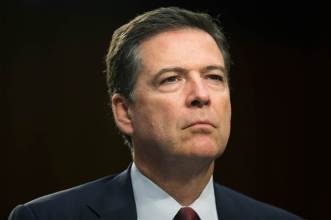
On Wednesday, President Donald Trump fired FBI Director James Comey, who had been investigating President Trump’s ties with the Russian government. Many progressives began to call for President Trump’s head—even though many have also called for Comey’s firing. Some even referred to Comey’s firing as a constitutional crisis. Others, including several Republicans, called for a special prosecutor.

150723-james-comey-jpo-500a_18fedec20ffef3fb4226c7fdced44951.nbcnews-fp-1200-800

From NBC News

But as calls for a special prosecutor increase, people must keep constitutional limits and separation of powers in mind. Certainly, appointing a special prosecutor* is constitutional per Morrison v. Olson. In that case, Congress appointed an Independent Counsel, Alexia Morrison, to investigate alleged wrongdoings by Reagan Administration officials. When she tried issuing subpoenas to some of Administration officials, they sued her, claiming that her position violated the Appointments Clause.

The Court disagreed with Ted Olson—the Reagan Administration official that sued Morrison. If an officer is a principal, she is subjected to the Appointments Clause, i.e. she must be appointed by the President and confirmed by the Senate. On the other hand, if she is an inferior officer, she does not have to go through these procedures. Although the Court acknowledged that the line between a principal and inferior officer is ambiguous, Morrison was clearly an inferior officer.

Continue reading

Forthcoming article, A Minimalist Solution to Williamson County

I’m pleased to announce that I have accepted an offer from the Duke Environmental Law and Policy Forum to publish my article, A Minimalist Solution to Williamson County. You can find a working draft here.

Here is the abstract to the article:

Williamson County Regional Planning Commission v. Hamilton Bank of Johnson County relegated takings claims coming under the Fifth Amendment to a second-class of federal rights. Before a takings plaintiff can sue in federal court, she must first seek compensation through an “adequate state procedure.” Many federal courts have held that requirement means a takings litigant must first seek compensation through state courts if that state provides an inverse condemnation proceeding. But if a takings litigant sues in state court, she will be unable to sue in federal court because of issue preclusion. This effectively shuts the federal courthouse door to many property owners. Only two Supreme Court justices have indicated any interest in revisiting Williamson County. Therefore, land use attorneys who are concerned about federal court access for takings plaintiffs should craft a case that would attract the Court’s attention. This Article argues that land use lawyers should present the Court with a case in which the property owner has used a non-judicial procedure to seek compensation (e.g., asking for compensation from a county board). The Court could then rule that such a non-judicial procedure, such as seeking compensation from a county board, is an “adequate state procedure” that satisfies Williamson County’s requirements. This ruling would minimize the negative effects that Williamson County has wrought on takings plaintiffs.

Did Missouri’s governor just moot Trinity Luteran v. Pauley?

Days before the Supreme Court is set to hear Trinity Lutheran v. Pauley, Missouri Governor Eric Greitens instructed the Department of Natural Resources (“DNR”) to allow religious organizations to apply, and receive grants. Because of this new order, Trinity Lutheran may be mooted. Indeed, the Supreme Court just today called for the parties’ views on how Governor Greitens’ order affects their case.

I’ve recently written on this case here. But a short backgrounder is appropriate. Trinity Lutheran Church applied for a generally available grant from DNR to obtain materials to build a playground. Although Trinity Lutheran Church had one of the highest ranking applications, DNR denied the church a grant solely because it is a religious institution. DNR cited Missouri’s Blaine Amendment, a provision in its state constitution that prohibits Missouri from supporting religious groups. Thus, Trinity Lutheran Church sued DNR, alleging that it violated the Free Exercise Clause and the Equal Protection Clause by denying it a grant.

Continue reading

Washington v. Trump: The dissent from rehearing

Today, the Ninth Circuit declined to consider en banc (by a full court) whether to vacate the published order blocking President Trump’s first executive order restricting travel from seven Muslin-majority countires. Since the Ninth Circuit issued its decision last month, President Trump issued a new executive order that supposedly corrects the old order’s problems.* The new order even removes Iraq from the list of countries whose nationals are not allowed entry into the United States. Thus, the case heard by the Ninth Circuit is moot.

Judge Jay Bybee authored a dissent from rehearing en banc to consider vacating the panel’s decision. In the opinion joined by four other judges, Judge Bybee thoroughly argued that the panel got the decision wrong. Quickly reading through the opinion, I still think that the panel got the decision right. President Trump’s executive order likely violated the Due Process Clause because it threw the legal status of green card holders from the seven Muslim-majority countries into flux without any process. Indeed, this is confirmed by the panic at airports across the country show that the order was facially problematic.

Continue reading

Three reasons why UCLA will win the tourney . . . and three reasons they won’t

This March Madness, I have UCLA winning their twelfth men’s basketball championship. Led by freshman sensation Lonzo Ball, the Bruins have the best eight-man rotation in college basketball. Ball has made UCLA basketball great again. With their up-tempo offense and artistic ball movement, they will be a tough out for any team. But behind their high-powered offense are several issues that may stop the Bruins form cutting down the nets in Glendale. Continue reading