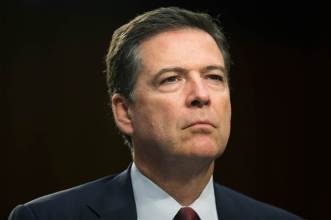
On Wednesday, President Donald Trump fired FBI Director James Comey, who had been investigating President Trump’s ties with the Russian government. Many progressives began to call for President Trump’s head—even though many have also called for Comey’s firing. Some even referred to Comey’s firing as a constitutional crisis. Others, including several Republicans, called for a special prosecutor.
From NBC News
But as calls for a special prosecutor increase, people must keep constitutional limits and separation of powers in mind. Certainly, appointing a special prosecutor* is constitutional per Morrison v. Olson. In that case, Congress appointed an Independent Counsel, Alexia Morrison, to investigate alleged wrongdoings by Reagan Administration officials. When she tried issuing subpoenas to some of Administration officials, they sued her, claiming that her position violated the Appointments Clause.
The Court disagreed with Ted Olson—the Reagan Administration official that sued Morrison. If an officer is a principal, she is subjected to the Appointments Clause, i.e. she must be appointed by the President and confirmed by the Senate. On the other hand, if she is an inferior officer, she does not have to go through these procedures. Although the Court acknowledged that the line between a principal and inferior officer is ambiguous, Morrison was clearly an inferior officer.
Justice Antonin Scalia was the lone dissent in that case—noting that the Independent Counsel was a “wolf [that] comes as a wolf” to threaten separation of powers principles. According to Justice Scalia, the Independent Counsel acted with prosecutorial powers, thus depriving the executive of exclusive control in this area. By allowing Congress to exercise prosecutorial powers, like issuing subpoenas, Justice Scalia argued that Congress was allowing the executives’ role to be supplanted.
In most cases, dissents are just that: dissents. But Justice Scalia’s Morrison dissent is different; it is “one of the greatest dissents every written and every year it gets better.” Indeed, it has arguably supplanted the majority opinion in its influence.
Although many are rushing to name a special prosecutor to continue Comey’s investigation into Trump’s nefarious dealings, I say slow down. If Congress does name a special prosecutor, they may well be running into a full-scale constitutional battle.
Some may ask what remedies are available to stop Trump? Certainly, Congress can impeach Trump, withhold spending, or stall his nominees; good luck with that in a Republican Congress. But in America, we are never too far away from our next election. And the next one is in eighteen short months.
*Assuming Congress reauthorizes the law allowing a special prosecutor to be appointed.
 Nhan Stop